
The State of Recovery
Rhode Island's Post-Pandemic Public School Landscape


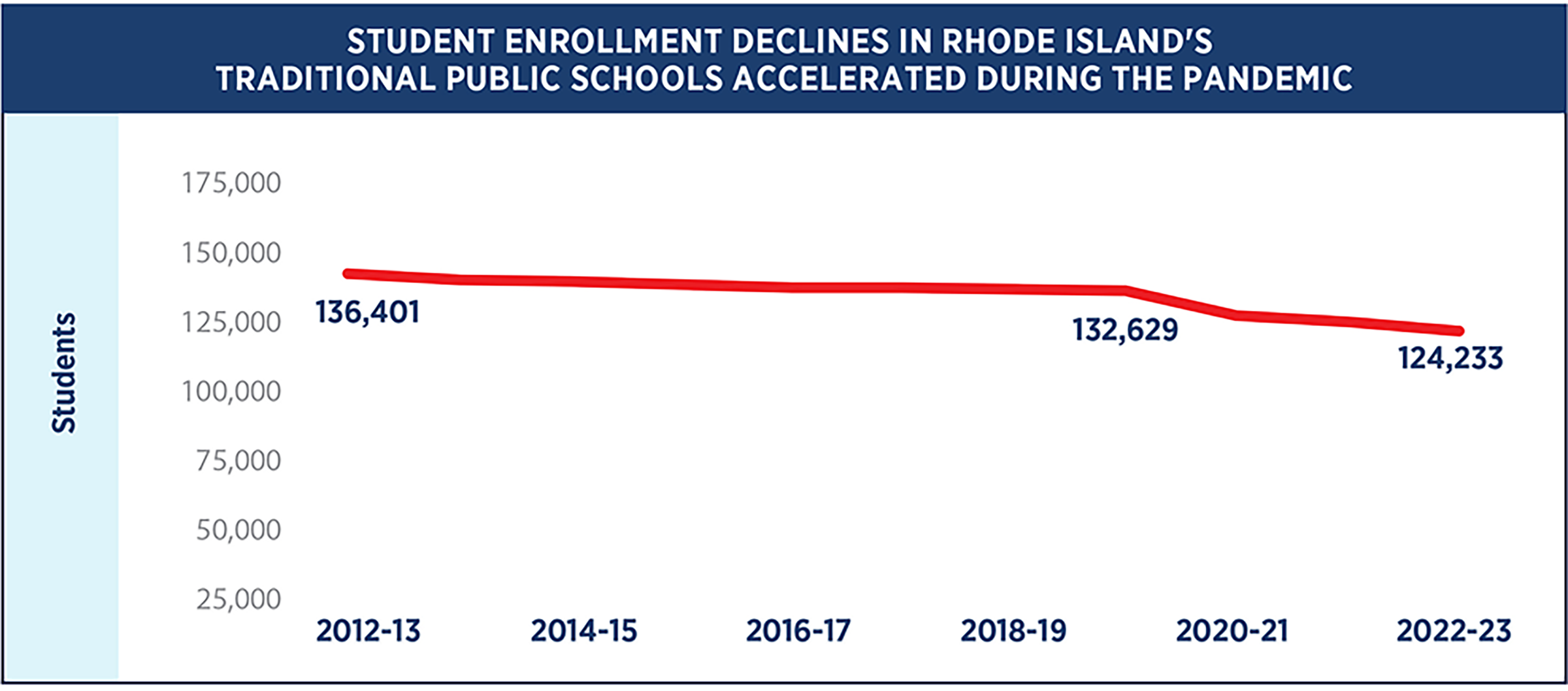
The past five years have brought tremendous upheaval to Rhode Island schools.
The COVID-19 pandemic has dramatically disrupted and reshaped education across the state and the nation. Long-standing issues of racial inequality were brought to the fore by the national racial reckoning that followed George Floyd’s murder. And the Johns Hopkins report laid bare the dire state of public education in Providence, and the resulting state intervention has dominated the state’s education discourse.1
As we emerge from the pandemic, schools face numerous challenges – pervasive concerns about student mental health and well-being, substantial learning recovery needs, tight educator labor markets and attendant staff shortages, and a changing economy that increasingly relies on skills and advanced credentials for labor market success.
However, despite these headwinds, the state has tremendous opportunity. School districts across the state have millions of dollars in ESSER relief funds at their disposal. Most districts have completed the hard work of introducing and adopting high-quality instructional materials designed to support high expectations for all students. Public education has received increased public attention, with growing understanding that schools need to do better to support the learning and development of all students, particularly students from historically marginalized groups.
Capitalizing on these opportunities requires a detailed understanding of where the state is and where it has been over the past decade.2